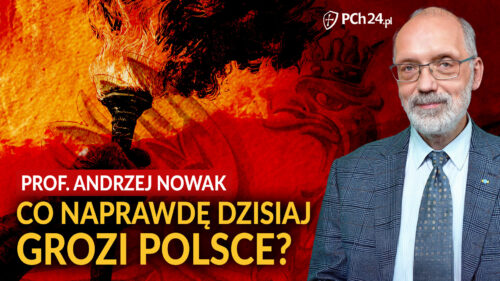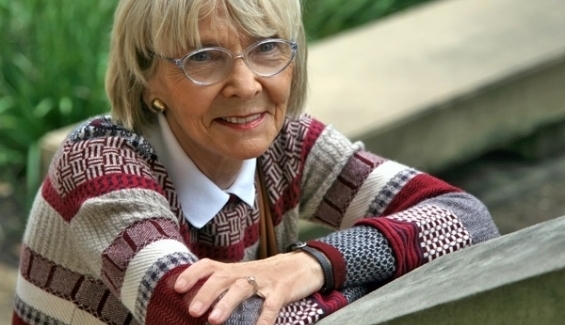
In the human world, as opposed to God’s world, two things are of principal importance: power and prestige. A colonized nation loses both power and prestige. A postcolonial nation gets a chance to rebuild its power and prestige, according to Professor Ewa Thompson, a researcher studying the phenomenon of postcolonialism in Central Europe, in an interview with PCh24.pl.
Is the Third Republic of Poland, as claimed by the politicians of the today’s party in power, Platforma Obywatelska, the biggest success of Polish elites since the Jagiellonian period (1386-1572)?
Wesprzyj nas już teraz!
Such a statement does not explain anything. By calling it “the best Poland since the Jagiellonian period,” we enter the area of subjective feelings. This is a completely different mental category. It is hard to discuss feelings, because it is impossible to prove that they are true or false.
So what is Poland now? Maybe a condominium, a colony, or a postcolony?
We should refer to dictionary definitions of terms such as colony and condominium. In order to qualify for these categories, one should sign necessary feudal agreements, which post-communist Poland has not signed. Therefore, you cannot talk about Poland as a colony or a condominium, unless it is in a figurative sense.
But this metaphor is a bit exaggerated and should not be overused. Instead, the category of postcolonialism – taking into consideration the Soviet military occupation in 1945-1989 and the inflicted economic, social, and political losses – suits Poland best. Poles were ruled by governors appointed by Moscow over a period of two generations and lived in fear of Soviet military intervention. When they finally freed themselves from the occupying army, they became a postcolony in economic, political, and cultural aspects.
Of course, there are various post-colonies and different colonizers, so Poland differs culturally, economically, and politically from Algeria, Ireland, and India.
France, the celebration of the 70th anniversary of the landing at Normandy. President Hollande mentioned all the nations that contributed to the victory over Germany in World War II. He did not even allude to Poles. But he directed the praise at the Red Army. Why did the mighty of this world forget about us again?
The history and achievements of a conquered nation are either forgotten or assigned to a winning nation. Therefore, forgetting about Poles contributing to the victory over the Third Reich, assigning Copernicus a German nationality, as well as Vladimir Spasovich, Vaslav Nijinsky, and Nikolai Przhevalsky a Russian nationality – these are routine untruths and someone repeating them may not even realize that they are false. This is because an empire “seizes” and considers achievements of the colonized peoples to be its own. If a nation does not regain independence, correcting this kind of fraud becomes practically impossible. How can Poland return to its independence? The correction depends on how successful the development of the former colony has been and the intensity of the “private initiatives” of its citizens, who should be indignant by such forgery and who ought to make individual efforts to oppose that.
Contrary to the belief of many Poles on the right side of the political spectrum, Polish institutions can do relatively little. However, writing letters to the press and foreign institutions in the case of a gross divergence from the truth is obviously a fundamental duty of any Polish consuls abroad. In democratic societies, though, one can achieve more by spontaneous and numerous private protests rather than by issuing an official statement by a diplomatic mission. For example, in the case of Mr. Hollande mentioned earlier, protest letters sent by the French citizens of Polish roots or Poles residing in France would be more effective than the protest of the embassy, which would be considered tactless “nitpicking.”
Also it must be said here that there are still not enough Poles who are talented, wealthy, and willing to undertake these kinds of private initiatives. After ten generations of murdering the bravest and unprecedented impoverishment of the society, people are afraid to come forward, they are afraid to take a risk of “looking for trouble” in a non-personal matter.
However, it is not that bad either. There are still many Poles, they could not have been totally exterminated, and there are brave people. In many cases, I can watch with satisfaction how Poles speak out in public forums in different parts of the world. If Poland manages to maintain independence, the great fallacy of history, such as the vision of Europe with its origins at the Congress of Vienna, will be corrected by Polish and non-Polish historians. But it requires a couple of generations and a lot of money.
You should also keep in mind that we live in the human society, not God’s. We hope for civitas Dei, while the history of the human kingdom is a great stream of injustice, only some of which will be named in a historical narrative of the world. You cannot turn this stream back 180 degrees or even give it a proper name, but of course, we should do whatever is in our power to correct it somewhat. In the human kingdom, we can mainly rely on what we do ourselves in order to diminish injustice, which is and will be there, though.
What about the Polish heritage and the Polish contributions to Europe? Have they been forgotten?
Yes, the Polish narrative was largely corrupted during the Partitions of Poland, which lasted for six generations, and then in the period of Soviet colonization, which lasted for two generations. A colonized nation loses its voice.
Here we come to the core of the problem. In the human world, as opposed to God’s world, two things are of principal importance: power and prestige. A colonized nation loses both power and prestige. A postcolonial nation gets a chance to rebuild its power and prestige. That does not happen automatically – it is the work of a few generations. Bearing this in mind, we should get involved in the process, not deluding ourselves into believing that we will win for sure, but of course, you can dream about it.
If postcolonial nations find enough determination to develop, they have to grow stronger economically, demographically, and culturally. Not in order to conquer neighbors or push their interests on weaker countries, but to be able to defend their citizens, borders, and identity. In the case of Poland, that is also to implement the values in the name of which so many Polish men and women lived and died in the past few centuries. This is a fundamental obligation to those who sacrificed their lives for these values. We do not fulfill this duty merely by lamenting over the situation in Polish politics. Instead, we should create the means with which we can influence this situation.
In the meantime, Poland neglects investment in science. How much does this affect promoting the achievements of Polish culture and history abroad?
This reminds me of an episode from John Paul II’s life, shortly after his election as Pope. When he commissioned the building of a swimming pool in the Vatican, some murmured that it was an unnecessary luxury of the new Holy Father. He replied as follows: “Building a pool will cost much less than organizing and paying for a new conclave.”
One must be able to distinguish between a luxury for the sake of luxury and a luxury that prevents much greater expenditure. Similarly, you have to grow from strength to strength not to be number one, but because being number one makes it possible for you to do more good. I realize that here we enter the slushy ground of feelings, but as we discuss the issue in a Catholic circle, I assume that from time to time, you can use the term such as “good” without defining it. Wealthy people may, for example, endow scholarships for poor students, found state-independent institutions, fund Catholic magazines, and invest in science. Therefore, I am a supporter of the slogan “Enrich yourselves!” It is true that Bukharin used this slogan during the NEP, but a completely different meaning of this phrase can be found within Chesterton’s distributism.
I would advise against pedantry with which the opponents of capitalism attack this kind of slogans, claiming that what is now called “capitalism” does not support spiritual development of a human. Keep in mind that we live in the earthly kingdom, not God’s kingdom, and we need to look for the most efficient method of multiplying our talents in the world around us, not in the world of our dreams. By moaning about contemporary capitalism and closing ourselves in the Holy Trinity trenches, we would behave like this servant who hid his talent in the ground, because he did not want to dirty his hands with uncertain transactions. Individual enrichment enhances Polish prestige abroad.
What is to be done to popularize the Polish cultural heritage and for Chopin not to be considered a French composer any longer?
To grow from strength to strength! To have the ambition to be the best in the world in your profession. To aim high. To encourage your children to aim high. To prepare them for being leaders. Poles tend to retreat one step before winning, in the name of a wrongly understood sense of Christian humility: “I do not want to be the first one. Let someone else take the first place.”
Big changes will take place only when Poland and Poles gain international prestige for their success in economic development, for inventiveness, perseverance, works of art that would appeal to everyone. There is a feedback between such achievements and the international status of Poland. We know that there are centers of power and pressure, which still see Poland as a bastard of the Versailles Treaty. We can nullify such views with our achievements. I believe in a Polish will to arise.
In Poland, we assess everything with regard to “Western progress.” If we are ashamed of our symbols and traditions, placing them on the altar of admiration for Western “modernity,” are we now able to promote originality and beauty of our own culture?
The background of your question is the belief that the world should be just or maybe that if we shout loud, the world will somehow compensate us for our wrongs. Well, it will not. The account of wrongs in this world will not ever be compensated. You need to face the truth and refrain from almost automatic pointing out how badly the fate has hurt Poles. I agree. It is hard to stop oneself from doing that. But we have to get used to the idea that loud shouting about injustice done to us, in most cases will be ignored. A productive response to injustice is doing and achieving one’s own aims. A loud correction of counterfeiting is highly justified – therefore I am, for example, full of pride in Maciej Świrski and his Reduta Dobrego Imenia (Polish Anti-Defamation League).
However, exposing defeats, even if they were noble defeats like the Warsaw Uprising, has different overtones in Poland, than, for instance, in the United States, where noble defeats do not count. Our heroes need to form us and be appreciated by us. At this stage of knowledge about the history of Europe and the world, we cannot fully share their heroism with others.
In Poland, even today, you can be proud of many things, from the still underrated and unadvertised achievements of Polish Catholicism, to the students of the University of Białystok who built the internationally-awarded Mars rovers, to the results of teenagers in the world rankings of cognitive abilities. I mix secular and spiritual categories here in order to emphasize that, as opposed to the latter, no-one actually popularizes the first ones in the world. Examples include the beauty and diversity of Polish Catholic churches and how the smallest, most disabled twenty-year-olds weighing 33 lbs are treated in Poland – those who are looked after by the nuns in Łódź, Ełk, and Niegów-Samaria. I was there. I saw it. These are unique things, especially compared to “storing” people or even performing euthanasia of people with disabilities in the United States.
The extent to which the country’s civilization is advanced is measured by the way it treats the weakest and most defenseless. In such a ranking, Poland would score very high. This is just one of many instances you can be truly proud of. But where are the laity, bishops, or priests making these things known to the world?